
How to Choose an HVAC Contractor: 12 Questions to Ask
Equipment brand accounts for a small share of how your system performs. Installation quality accounts for most of it. Screen the installer harder than the box.
Connect this button to your email provider (Mailchimp, ConvertKit or Beehiiv) to start collecting subscribers. The form endpoint goes here.
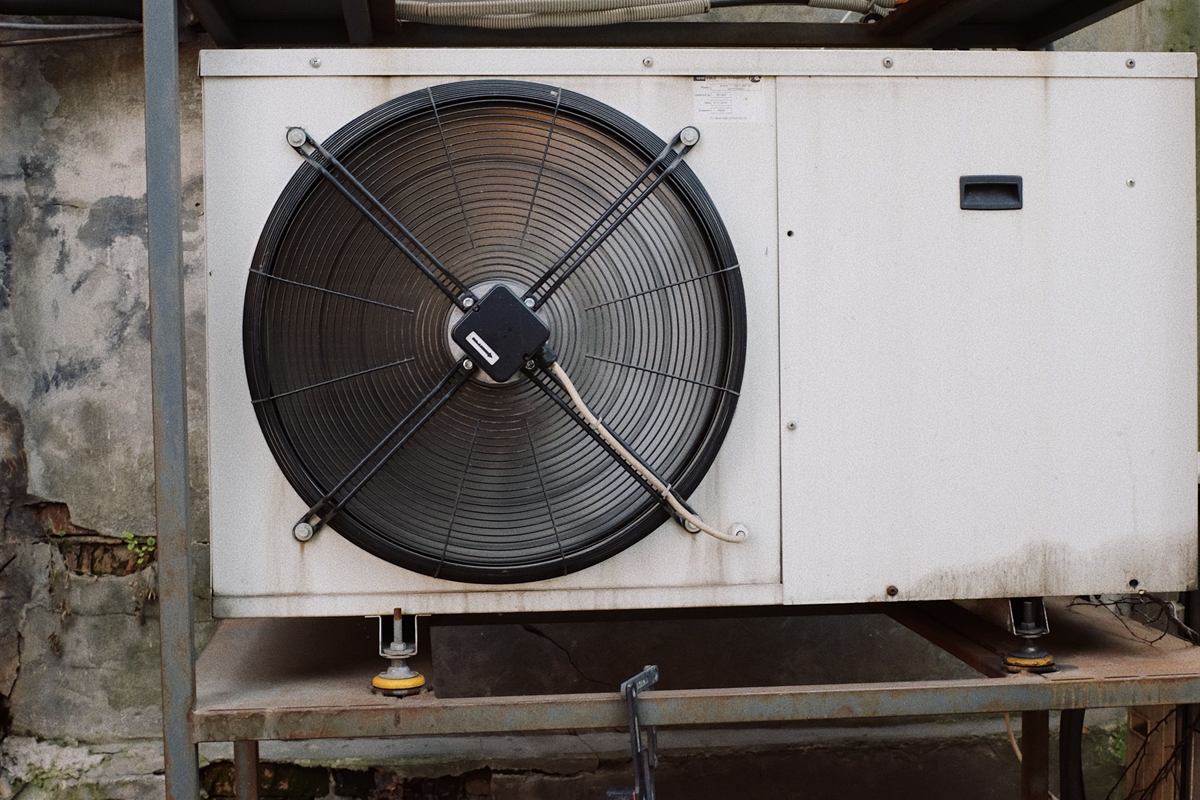
An undersized system announces itself immediately. An oversized one feels fine on day one, then quietly costs you comfort and money for fifteen years.
Most homeowners assume that if a heat pump is going to be the wrong size, bigger is the safer mistake. It is the opposite. An undersized system announces itself immediately and you can usually live with it. An oversized system feels fine on day one and then quietly delivers worse comfort, higher bills and a shorter equipment life for the next fifteen years.
Here is what each failure mode actually does, how to recognise which one you have, and what can be done about it after the fact.
An oversized heat pump produces more capacity than the house needs, so it satisfies the thermostat quickly and shuts off. That sounds efficient. It is not, for four separate reasons.
It short cycles. Reaching setpoint in six minutes means starting again a few minutes later. Compressor starts are the hardest thing the system does, and multiplying them accelerates wear on the compressor, contactor and capacitor. Repeated runs under about seven minutes are the usual threshold for calling it short cycling.
It cannot dehumidify. This is the complaint people describe without knowing the cause: the thermostat reads 74°F and the house still feels clammy. Removing moisture requires air passing across a cold coil for a sustained period. A system that satisfies temperature in a few minutes never runs long enough to wring out the water, so you get the right number on the wall and the wrong feeling in the room.
It makes rooms less even, not more. Short bursts of air favour whatever is closest to the thermostat. Distant rooms need sustained airflow to come up to temperature, and they never get it, so the temperature spread between rooms widens.
It costs more, twice. More capacity costs more upfront, and the startup surge on every cycle means more electricity for the same delivered comfort.
An undersized system is the more visible failure and the less insidious one. It runs continuously in extreme weather and still falls behind on the coldest and hottest days.
The redeeming feature of undersizing is that continuous running is efficient per hour of operation and dehumidifies well. The problem is capacity on design days, not comfort on average days.
| Symptom | Oversized | Undersized |
|---|---|---|
| Cycle length | Very short, repeated | Very long or continuous |
| Summer humidity | Clammy despite correct temperature | Usually fine |
| Reaching setpoint | Fast, then off | Slow, sometimes never on extreme days |
| Aux heat use in winter | Normal to low | High |
| Temperature swing between cycles | Noticeable, rapid | Slow drift |
| Behaviour in mild weather | Worst; barely runs before satisfying | Fine; this is where it looks healthy |
| Behaviour on design days | Looks acceptable | Worst; cannot keep up |
The last two rows are the most useful diagnostic. Oversizing looks worst in mild weather, when the load is small and the system is most mismatched to it. Undersizing looks worst in extreme weather. If your complaints cluster in spring and autumn, suspect oversizing; if they cluster in January and July, suspect undersizing.
Three habits produce nearly all of it:
You cannot make an installed system smaller, but the effects can be softened.
If it is oversized: widen the thermostat differential so it runs longer per cycle; use a dehumidifier in summer rather than dropping the setpoint to chase comfort; improve duct balancing so distant rooms get their share of the shorter run; and if it is a multi-stage or variable-speed unit, verify it is actually configured to use its lower stages rather than jumping to full output.
If it is undersized: reduce the load rather than fighting it. Air sealing and attic insulation are usually cheaper than replacing equipment and shrink the load permanently. Set the aux heat lockout thoughtfully so backup engages when genuinely needed rather than at every shortfall. Avoid deep setbacks, since recovery is where an undersized system struggles most.
At replacement time, insist on a Manual J and ask to see the output. A contractor who will not produce one has told you what you need to know, which is the point of these screening questions.
Is it better to oversize or undersize a heat pump? Neither, and the framing is the trap. If forced to choose, mild oversizing on a variable-speed system is more tolerable than on a single-stage one, because it can modulate down. On single-stage equipment, oversizing produces the humidity and cycling problems above and is the worse error.
My house feels humid in summer. Does that mean my system is too big? It is the most common cause, particularly when the temperature is correct and the air still feels heavy. Before concluding that, rule out a fan set to run continuously rather than auto, which re-evaporates moisture off the coil between cycles.
Can a variable-speed system fix oversizing? It reduces the symptoms considerably by running at part load rather than cycling. It does not eliminate the problem, because even a modulating compressor has a minimum output, and a badly oversized unit can still exceed the load at its lowest stage.
How far off does sizing have to be before it matters? Small deviations are absorbed without much consequence. Problems become noticeable when capacity exceeds the load by a substantial margin, which is roughly what happens when someone rounds a calculated load up by a full ton "for safety."
Homeowners who collect three written quotes typically save 12–18% on the same system. Tell us your ZIP and we will connect you with licensed installers in your area.
Every figure on this page is a range, not an average, and the distinction matters. A national average blends a garage mini split with a five-ton ducted replacement and describes neither. Ranges tell you where your own job is likely to land.
Found something out of date or contradicted by a quote you have in hand? Tell us — corrections are the messages we most want to receive.
Primary references for the figures and procedures on this page. Where a number here is a range drawn from field experience rather than a published measurement, it is labelled as such in the text.
Last checked September 2026. Rebate amounts and program status change frequently; always confirm against the official program page before you sign a contract.
Equipment brand accounts for a small share of how your system performs. Installation quality accounts for most of it. Screen the installer harder than the box.

Installed prices run from $5,500 for a straightforward single-zone swap to $22,000 for a whole-home ducted system with electrical work. Here is what drives the difference.

The first zone carries the outdoor unit and most of the labor. Every zone after that is comparatively cheap — until you cross the multi-head threshold.

The short answer is yes, and modern cold-climate units are rated to keep producing useful heat down to -13°F. The longer answer is about capacity, not failure.