
How to Choose an HVAC Contractor: 12 Questions to Ask
Equipment brand accounts for a small share of how your system performs. Installation quality accounts for most of it. Screen the installer harder than the box.
Connect this button to your email provider (Mailchimp, ConvertKit or Beehiiv) to start collecting subscribers. The form endpoint goes here.
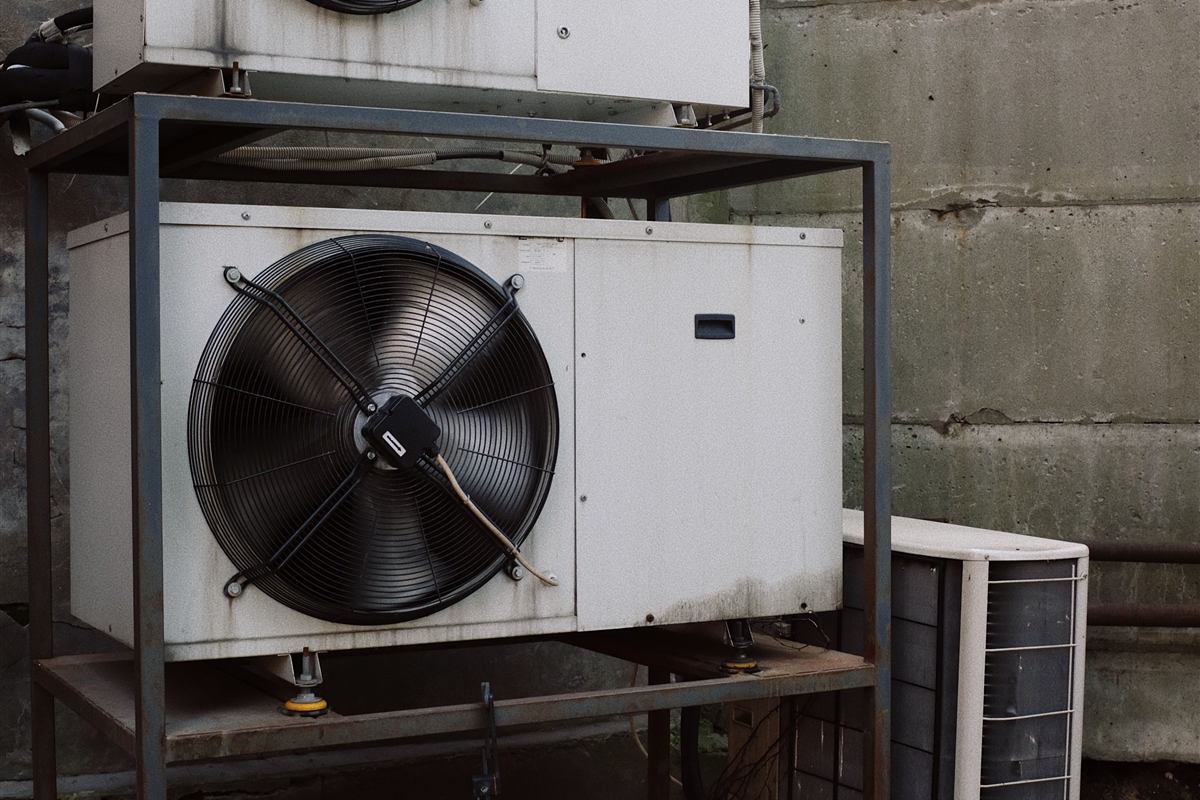
Some of the alarming noises a heat pump makes are the system working correctly. A few are warnings you should not run through. The difference is usually easy to hear.
Four noises get reported as faults constantly and are the system doing exactly what it should.
A whoosh or a solid clunk, occasionally. That is the reversing valve shifting. It happens when you switch between heating and cooling, and it happens at the start and end of every defrost cycle. It is abrupt and it is supposed to be. Its absence, combined with ice building up, is the thing worth worrying about.
The outdoor fan stopping while the compressor keeps running. The change in sound is dramatic and it alarms people. During defrost the fan is switched off deliberately, because blowing cold air across a coil you are trying to warm would defeat the purpose.
A low hum from the outdoor unit while running. The compressor makes noise. A steady hum that has always been there is not a fault.
Clicking once at start and once at stop. That is the contactor closing and opening. One click at each end of a cycle is normal.
The useful test for any sound is whether it is new. A system that has always made a particular noise and still makes it is far less concerning than one that started making it last week.
Grinding or metal-on-metal scraping, a loud screech that persists rather than passing, or a hum or buzz with no movement at all. Add to that any noise accompanied by a burning smell, smoke or a breaker that trips. Switch the system off at the breaker rather than the thermostat and call a technician.
Grinding or scraping. Metal contacting metal that should not be. Usually a failing motor bearing or a fan blade striking something. Continuing to run it turns a bearing replacement into a motor replacement, and a fan striking the coil can puncture it.
A persistent screech. A brief squeal at start-up on an older system is less alarming than a continuous one. Sustained screeching points at bearings or, on some equipment, at pressure that is too high.
Humming or buzzing with nothing turning. This is the classic signature of a failed start capacitor or a seized motor. The system is trying to start and cannot. Every additional attempt draws heavy current through a motor that is not moving, which is how windings burn out. This one genuinely should not be left running while you wait for an appointment.
| Sound | Usually points to | Urgency |
|---|---|---|
| Rattling that changes with fan speed | Loose panel, screw or debris inside the cabinet | Low, but find it before it does damage |
| Repetitive clicking every few seconds | Contactor chattering, often low control voltage | Medium, needs diagnosis |
| Gurgling or bubbling | Often the condensate drain; occasionally refrigerant | Medium, see the drain first |
| Vibration or drumming through the house | Mounting feet, pads or the line set touching structure | Low, a comfort problem more than a fault |
| A brief squeal only at start-up | Bearings beginning to wear | Medium, note whether it worsens |
| Sound of running water after shutdown | Refrigerant equalising or condensate draining | Usually normal |
Rattling deserves a note because it is the one homeowners can most often resolve. Panels loosen over years of vibration, and debris finds its way into the cabinet. With the power off at the disconnect, checking that panels are secure and clearing loose debris is within normal maintenance.
Which unit is making the sound rules out half the possibilities immediately.
If the noise comes with the system failing to start rather than merely sounding wrong, work through the not-turning-on checklist, which covers the hum-without-movement case in more detail.
Noise complaints are among the hardest to diagnose remotely, because the fault frequently declines to reproduce itself while someone is standing there. Four details make the visit shorter:
Also mention whether the noise is new or has been gradually worsening. Gradual deterioration points at wear; a sudden new noise points at something that broke or came loose.
Is a loud bang when my heat pump starts a problem? A single solid clunk at the start of a cycle or a mode change is usually the reversing valve, which is normal. A repeated bang, or one loud enough to be startling every time, is worth having checked, since it can also be duct expansion under high static pressure.
My outdoor unit hums but nothing spins. What is that? Most often a failed start capacitor, sometimes a seized motor. The system is drawing current while trying to start something that will not turn, so switch it off at the breaker rather than leaving it to keep trying.
Why is my heat pump louder in winter than in summer? Partly because it works harder at low outdoor temperatures, and partly because defrost cycles add sounds that do not occur in cooling season: the valve shifting, the fan stopping, and the system changing state more often.
Can I quiet a noisy outdoor unit myself? Vibration transmitted through mounting pads or a line set touching the house is often improvable with isolation pads or proper line-set support, and that is legitimate. What you should not do is enclose the unit to muffle it, because restricting airflow causes faults far more expensive than the noise.
Sounds are grouped by whether they indicate normal operation or a fault, because most calls about noise turn out to be normal behaviour that has simply never been explained. Where a sound warrants cutting power rather than waiting for an appointment, that is stated explicitly.
Primary references for the figures and procedures on this page. Where a number here is a range drawn from field experience rather than a published measurement, it is labelled as such in the text.
Last checked September 2026. Sound descriptions are general to residential air-source systems; confirm against the manual for your model.
Equipment brand accounts for a small share of how your system performs. Installation quality accounts for most of it. Screen the installer harder than the box.

Installed prices run from $5,500 for a straightforward single-zone swap to $22,000 for a whole-home ducted system with electrical work. Here is what drives the difference.

The first zone carries the outdoor unit and most of the labor. Every zone after that is comparatively cheap — until you cross the multi-head threshold.

The short answer is yes, and modern cold-climate units are rated to keep producing useful heat down to -13°F. The longer answer is about capacity, not failure.