
How to Choose an HVAC Contractor: 12 Questions to Ask
Equipment brand accounts for a small share of how your system performs. Installation quality accounts for most of it. Screen the installer harder than the box.
Connect this button to your email provider (Mailchimp, ConvertKit or Beehiiv) to start collecting subscribers. The form endpoint goes here.
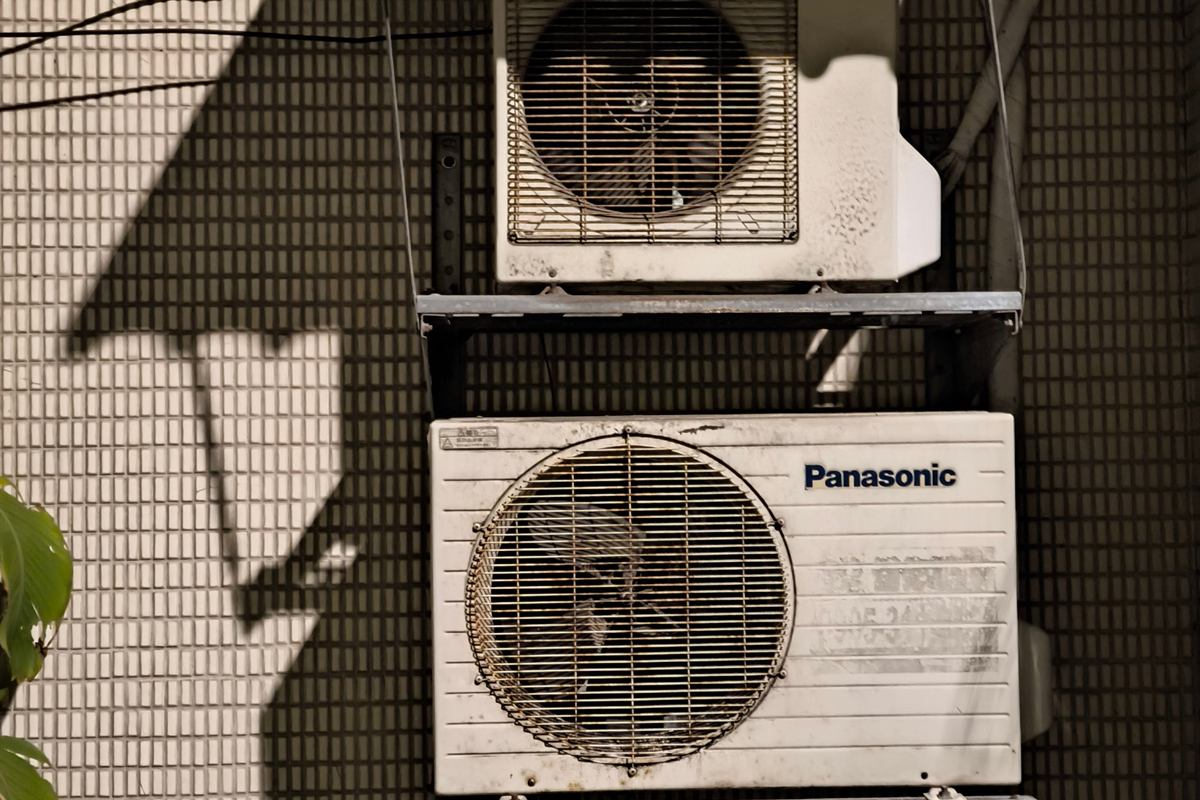
A mini split is a heat pump. The real comparison is ducted against ductless, and one question settles most of it: do you have usable ductwork?
The question is phrased wrong almost every time it is asked. A mini split is a heat pump. The real comparison is between a ducted heat pump, which distributes air through the duct network you probably already have, and a ductless heat pump, which puts individual indoor units in the rooms themselves.
Once you see it that way the decision gets much simpler, because it stops being about technology and starts being about one question: do you have usable ductwork?
Both systems use identical physics. An outdoor unit moves heat between the refrigerant and the outdoor air, a reversing valve decides which direction, and a compressor does the work. Our explainer on how heat pumps work applies equally to both.
The only difference is delivery. A ducted system has one indoor coil and blower feeding air into ducts. A ductless system skips the ducts and mounts indoor heads in each conditioned room, connected to the outdoor unit by refrigerant lines instead of ducts. That is the entire distinction.
| Your situation | Usually the better fit |
|---|---|
| Existing ductwork in good condition | Ducted |
| No ductwork at all (radiators, baseboard, older home) | Ductless |
| Ductwork exists but leaks badly or is undersized | Depends on repair cost; get both quoted |
| Conditioning an addition, garage, attic or sunroom | Ductless |
| One or two problem rooms in an otherwise fine house | Ductless, as a supplement |
| Large home, want uniform temperature everywhere | Ducted |
| Want different temperatures in different rooms | Ductless |
| Strong preference against visible wall units | Ducted, or ductless with concealed-duct heads |
Ductless systems generally publish higher efficiency numbers, with SEER2 ratings commonly in the 20s and above, while central ducted heat pumps typically land in the mid-teens to low 20s. Part of that is equipment design, and part is the ducts themselves.
Duct losses are the underrated factor. A typical duct system loses a meaningful share of conditioned air to leaks and to running through unconditioned spaces like attics and crawlspaces, commonly cited in the range of 15 to 30%. Air you paid to heat that ends up warming your attic does not appear on any spec sheet. Ductless systems have no such losses because there are no ducts.
The caveat: sealing and insulating existing ducts is far cheaper than replacing a whole system, and it recovers much of that loss. If your ducts leak, fix the ducts before concluding you need different equipment.
Installed costs overlap heavily, and quoting a single number for either is misleading. What actually decides the total:
For the full picture on either route, see the installation cost breakdown.
Ducted does uniformity and filtration better. One thermostat, one system, even temperatures, and a single filter location where you can fit serious filtration for allergies. Nothing visible in the rooms beyond registers.
Ductless does zoning and retrofit better. Each head has its own setpoint, so unused rooms are not conditioned, and a bedroom can run cooler than a living room. In a house that never had ducts, it avoids a construction project entirely.
Where each is weaker: ducts hide their own faults, since leaks and blockages sit inside walls where you cannot see them degrade. Ductless puts equipment on your walls, needs filter cleaning at every head rather than one central location, and in most multi-zone systems all heads must run in the same mode, so one room cannot cool while another heats.
These are not mutually exclusive. A common and sensible arrangement is keeping a ducted system for the main floor and adding one or two ductless heads for the spaces the ducts serve badly: a finished attic, a bonus room over the garage, an addition. This avoids both redesigning a whole duct system and covering the house in wall units.
Concealed-duct ductless heads are a second middle path. They are ductless-system indoor units that hide in a soffit or closet and feed two or three nearby rooms through short duct runs, giving you the retrofit flexibility without visible wall units in every room.
The contractor's answers matter more than the equipment choice, which is what our contractor screening questions are for.
Is a mini split a heat pump? Yes. A mini split is a ductless heat pump. The terms describe different attributes: "heat pump" is the technology, "mini split" describes the ductless configuration. Nearly all mini splits sold today both heat and cool.
Can I use one outdoor unit for several rooms? Yes, that is a multi-zone system, with one outdoor unit serving several indoor heads. Be aware that most multi-zone systems run all heads in the same mode at once, so simultaneous heating in one room and cooling in another usually is not possible.
Are mini splits noisy? Indoor heads are quiet, typically in the low 20s of decibels at minimum fan speed, which is quieter than a ducted system's air rushing through registers. The outdoor units are comparable between the two types.
Will ductless heads hurt my resale value? Opinions vary by market. In regions where ductless is common the reaction is neutral to positive, particularly for a house that previously had no cooling at all. Where central air is the expectation, some buyers react to visible wall units. Concealed-duct heads sidestep the issue if it concerns you.
Homeowners who collect three written quotes typically save 12–18% on the same system. Tell us your ZIP and we will connect you with licensed installers in your area.
Every figure on this page is a range, not an average, and the distinction matters. A national average blends a garage mini split with a five-ton ducted replacement and describes neither. Ranges tell you where your own job is likely to land.
Found something out of date or contradicted by a quote you have in hand? Tell us — corrections are the messages we most want to receive.
Primary references for the figures and procedures on this page. Where a number here is a range drawn from field experience rather than a published measurement, it is labelled as such in the text.
Last checked September 2026. Rebate amounts and program status change frequently; always confirm against the official program page before you sign a contract.
Equipment brand accounts for a small share of how your system performs. Installation quality accounts for most of it. Screen the installer harder than the box.

Installed prices run from $5,500 for a straightforward single-zone swap to $22,000 for a whole-home ducted system with electrical work. Here is what drives the difference.

The first zone carries the outdoor unit and most of the labor. Every zone after that is comparatively cheap — until you cross the multi-head threshold.

The short answer is yes, and modern cold-climate units are rated to keep producing useful heat down to -13°F. The longer answer is about capacity, not failure.