
How to Choose an HVAC Contractor: 12 Questions to Ask
Equipment brand accounts for a small share of how your system performs. Installation quality accounts for most of it. Screen the installer harder than the box.
Connect this button to your email provider (Mailchimp, ConvertKit or Beehiiv) to start collecting subscribers. The form endpoint goes here.
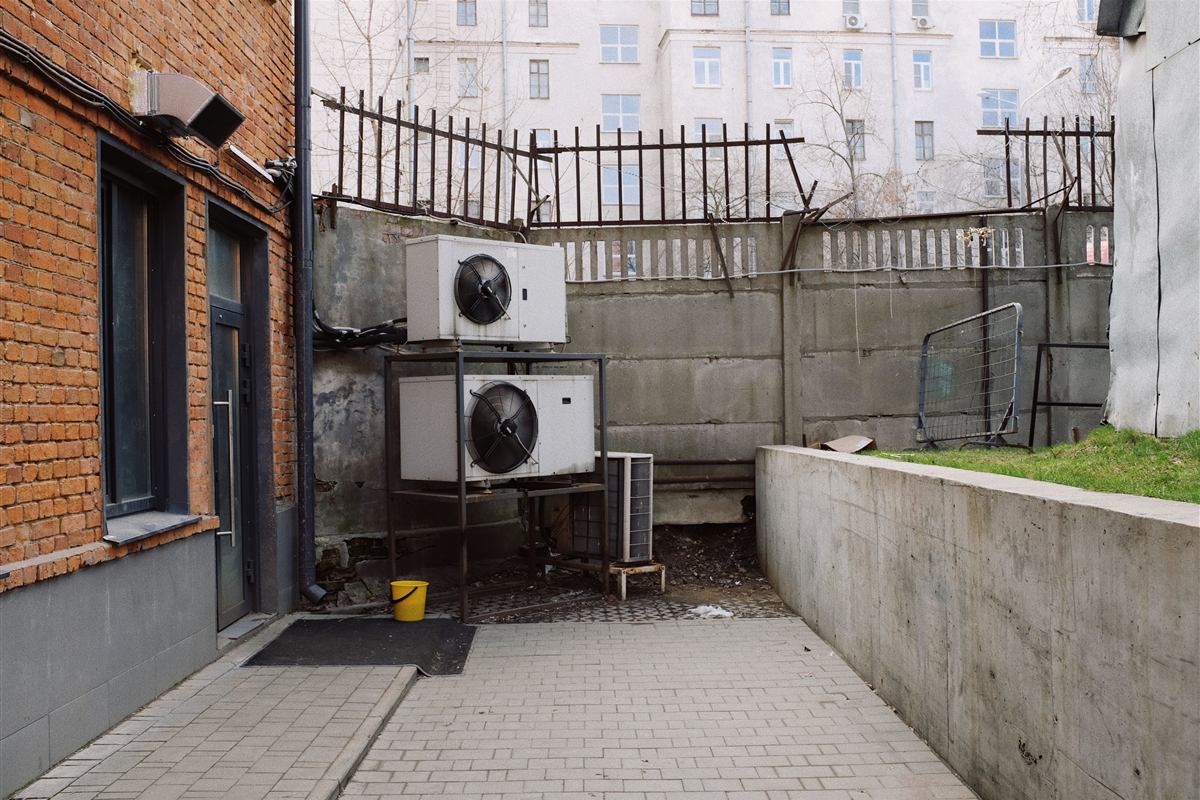
Ducted systems average 10 to 15 years and mini splits 15 to 20. Where your system lands inside that range is decided at installation more than by anything you do afterwards.
| System type | Typical service life |
|---|---|
| Ducted air-source heat pump | 10–15 years, with well-maintained modern units reaching 15–20 |
| Ductless mini split | 15–20 years, sometimes beyond 20 |
| Geothermal indoor equipment | 20–25 years |
| Geothermal ground loop | rated for 50 years or more |
The mini split advantage is mechanical rather than marketing. With no ductwork there is less airflow resistance for the blower to fight, so the system works less hard to move the same heat. The ground loop figure looks extraordinary until you remember it is buried pipe with no moving parts.
One number that surprises people: a heat pump accumulates roughly twice the annual runtime of a furnace-and-air-conditioner pairing, because it is the heating system and the cooling system. Comparing its lifespan against a furnace's 15 to 20 years is not comparing like with like.
Four things account for most premature failures, and three of them are decided before the installer leaves.
Incorrect sizing. An oversized system satisfies the thermostat quickly and shuts off, then restarts a few minutes later. Compressor starts are the hardest thing the equipment does, and multiplying them across fifteen years does measurable damage. This is the mechanism behind short cycling, and it traces back to sizing decisions made at the quote stage.
Refrigerant charge set wrong at commissioning. A system running undercharged makes the compressor work harder and hotter for less output. It rarely fails immediately; it fails years early. This is why the charge-verification question matters when screening a contractor.
Restricted airflow. Dirty filters, closed registers, undersized returns and blocked outdoor coils all force the equipment to run longer and hotter for the same result. This one is the homeowner's to control, and it is the cheapest lever available.
Coastal salt air. Salt accelerates pitting on the outdoor coil and degrades the fins. What fails first is usually heat-transfer efficiency rather than the compressor, so the system quietly costs more to run for years before anything breaks outright. Coastal installations commonly land at the bottom of the published range rather than the middle.
None of this makes a badly sized system last, which is the uncomfortable part. Maintenance decides whether a system reaches its potential lifespan. Installation decides what that potential is.
The commonly used shortcut is the 50 percent rule: if a repair quote exceeds half the cost of replacement on a system already over about 10 years old, replacing is usually the better decision. It is a rough guide rather than arithmetic, but it captures the right instinct.
Two refinements worth applying:
Also weigh what is no longer available. Systems built for R-410A are working through a regulatory phase-down, and refrigerant for older equipment becomes progressively more expensive to source. That does not make repair wrong, but it belongs in the calculation.
Before deciding, get the replacement number rather than guessing it. Our installation cost breakdown and the rebates still available in your state frequently change the answer, because a rebate applies to replacement and never to a repair.
Age alone is a weak signal. These are stronger:
Any single one of these is worth a diagnosis rather than a replacement decision. Several at once on a system past its published range is the pattern that usually settles it.
Do mini splits really last longer than ducted systems? On average yes, roughly 15 to 20 years against 10 to 15, and the reason is mechanical: no ductwork means less airflow resistance and less strain on the blower. Installation quality still moves individual results more than the category does.
Does running a heat pump year-round wear it out faster? It accumulates roughly twice the runtime of a system that only heats or only cools, which is exactly why the published lifespan looks shorter than a furnace's. Per hour of operation it is not working harder, there are simply more hours.
Is it worth replacing a working 12-year-old system for efficiency alone? Rarely on efficiency alone. The gain is real but the payback usually runs long, and the environmental and financial cost of discarding working equipment is not trivial. Replace when repairs, comfort or reliability make the case, and take the efficiency improvement as a bonus.
How much does climate change the answer? Substantially. A system in a mild climate with moderate runtime and no salt exposure can beat the published range. The same equipment on a coast, or running hard through severe winters, commonly lands at the bottom of it.
Lifespan figures here are typical ranges from industry sources rather than guarantees, and they are given as ranges because the spread within any one category is wider than the difference between categories. Where a factor is listed as shortening life, it is one with a clear mechanical explanation rather than a rule of thumb.
Primary references for the figures and procedures on this page. Where a number here is a range drawn from field experience rather than a published measurement, it is labelled as such in the text.
Last checked September 2026. Lifespan figures are typical US ranges; individual results vary widely with climate and installation quality.
Equipment brand accounts for a small share of how your system performs. Installation quality accounts for most of it. Screen the installer harder than the box.

Installed prices run from $5,500 for a straightforward single-zone swap to $22,000 for a whole-home ducted system with electrical work. Here is what drives the difference.

The first zone carries the outdoor unit and most of the labor. Every zone after that is comparatively cheap — until you cross the multi-head threshold.

The short answer is yes, and modern cold-climate units are rated to keep producing useful heat down to -13°F. The longer answer is about capacity, not failure.