
How to Choose an HVAC Contractor: 12 Questions to Ask
Equipment brand accounts for a small share of how your system performs. Installation quality accounts for most of it. Screen the installer harder than the box.
Connect this button to your email provider (Mailchimp, ConvertKit or Beehiiv) to start collecting subscribers. The form endpoint goes here.
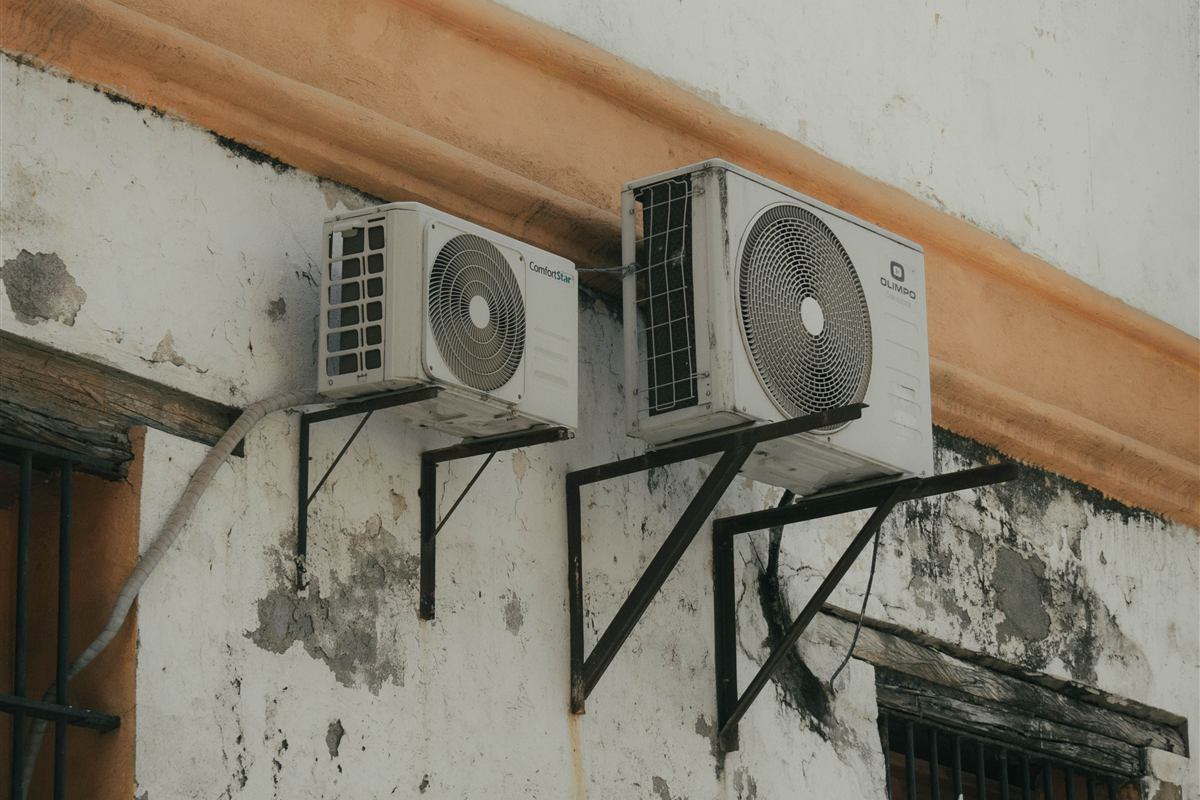
Water pooling outside during winter is usually normal. Water anywhere near the indoor unit is not, and one cause accounts for most of it.
These are different problems with different urgency, and treating them as one question is why people worry about the harmless case and ignore the expensive one.
| Where the water is | Usual meaning | Urgency |
|---|---|---|
| Under the outdoor unit, in winter | Melt water from normal defrost cycles | Normal, unless it is refreezing |
| Under the outdoor unit, in summer | Condensate, in humid weather | Normal in cooling |
| Around the indoor unit or air handler | Condensate that is not draining | Act now, this causes damage |
| Dripping from a ceiling below the air handler | Overflowing drain pan | Urgent |
| Dripping from an indoor mini split head | Blocked drain line or a sloping fault | Act now |
The short version: outdoor water is usually the system working. Indoor water is the system failing to get rid of water it always produces.
A heat pump produces water as a matter of course. In cooling it condenses moisture out of indoor air. In heating it collects frost on the outdoor coil and then melts it off during each defrost cycle. That melt water has to go somewhere, and a puddle underneath is where it goes.
When outdoor water is a problem:
The indoor coil condenses moisture out of the air, that water collects in a drain pan, and the pan drains away through a line. Almost every indoor leak is a failure somewhere in that chain, and the most common failure by a wide margin is the simplest one.
1. A clogged drain line. Biological growth builds up inside the line over time until water cannot pass. The pan fills, then overflows. This is by far the most frequent cause and it is within normal homeowner maintenance to clear.
2. A full or failed condensate pump. Where the drain cannot run downhill, a small pump moves the water. If it fails, the pan fills.
3. A cracked or rusted drain pan. Older systems, and the reason a secondary pan exists on attic installations.
4. A frozen indoor coil that is now melting. Restricted airflow from a dirty filter can freeze the indoor coil in cooling. When it thaws it produces far more water at once than the pan is designed to handle. If you find ice on the indoor coil, the leak is a symptom and the airflow is the cause.
5. Disconnected or poorly sloped drain line. Frequently a workmanship issue that appears soon after installation or service.
6. A blocked mini split drain. On a wall-mounted head the drain runs through the wall penetration. A blockage or a line that has been kinked or lifted sends water back into the unit and down the wall.
Many systems have a float switch in the drain pan that cuts the whole system off when the water level rises. That is deliberate: it is cheaper to lose cooling than to lose a ceiling.
This produces a symptom that looks nothing like a leak. The system simply refuses to run, the thermostat appears fine, and nothing obvious is wrong. If your system has stopped dead and you have not looked in the drain pan, look there, because a full pan will keep it off no matter what you do at the thermostat. The full sequence is in the not-turning-on checklist.
Until the water level drops, the system stays off. Clearing the drain resolves both the leak and the shutdown at once.
Call a technician if the coil is icing repeatedly with a clean filter, if the pan is cracked, if a condensate pump has failed, or if clearing the line does not resolve it. Repeated indoor coil freezing with good airflow can indicate low refrigerant charge, which needs an EPA Section 608 certified technician because it means a leak.
This is one of the few faults that is genuinely preventable with routine attention.
Is water under my heat pump in winter normal? Usually yes. Each defrost cycle melts frost off the outdoor coil and that water drains underneath. It becomes a problem only if it cannot drain away and refreezes into a growing mass of ice around the base.
Can I just empty the drain pan and carry on? Only as a stopgap. The pan filled because the water could not leave through the drain, so emptying it treats the symptom. Clear the line, otherwise it fills again within days.
Why did my system stop working when the only problem was water? Because of the float switch, which shuts the system down deliberately when the pan fills so that water does not overflow into the building. It is protection working, not a second fault.
Could a leak be refrigerant instead of water? Refrigerant leaves as a gas, so it does not pool. Visible liquid is water in essentially all cases. Refrigerant leaks show up as declining capacity, icing and eventually a compressor at risk, which is a different diagnosis entirely.
Indoor and outdoor water are treated separately because they have almost nothing in common: one is usually condensate management, the other is usually normal melt. Causes within each are ordered by how often they turn out to be the answer.
Primary references for the figures and procedures on this page. Where a number here is a range drawn from field experience rather than a published measurement, it is labelled as such in the text.
Last checked September 2026. Procedures are general to residential systems; confirm against the manual for your model.
Equipment brand accounts for a small share of how your system performs. Installation quality accounts for most of it. Screen the installer harder than the box.

Installed prices run from $5,500 for a straightforward single-zone swap to $22,000 for a whole-home ducted system with electrical work. Here is what drives the difference.

The first zone carries the outdoor unit and most of the labor. Every zone after that is comparatively cheap — until you cross the multi-head threshold.

The short answer is yes, and modern cold-climate units are rated to keep producing useful heat down to -13°F. The longer answer is about capacity, not failure.