
How to Choose an HVAC Contractor: 12 Questions to Ask
Equipment brand accounts for a small share of how your system performs. Installation quality accounts for most of it. Screen the installer harder than the box.
Connect this button to your email provider (Mailchimp, ConvertKit or Beehiiv) to start collecting subscribers. The form endpoint goes here.
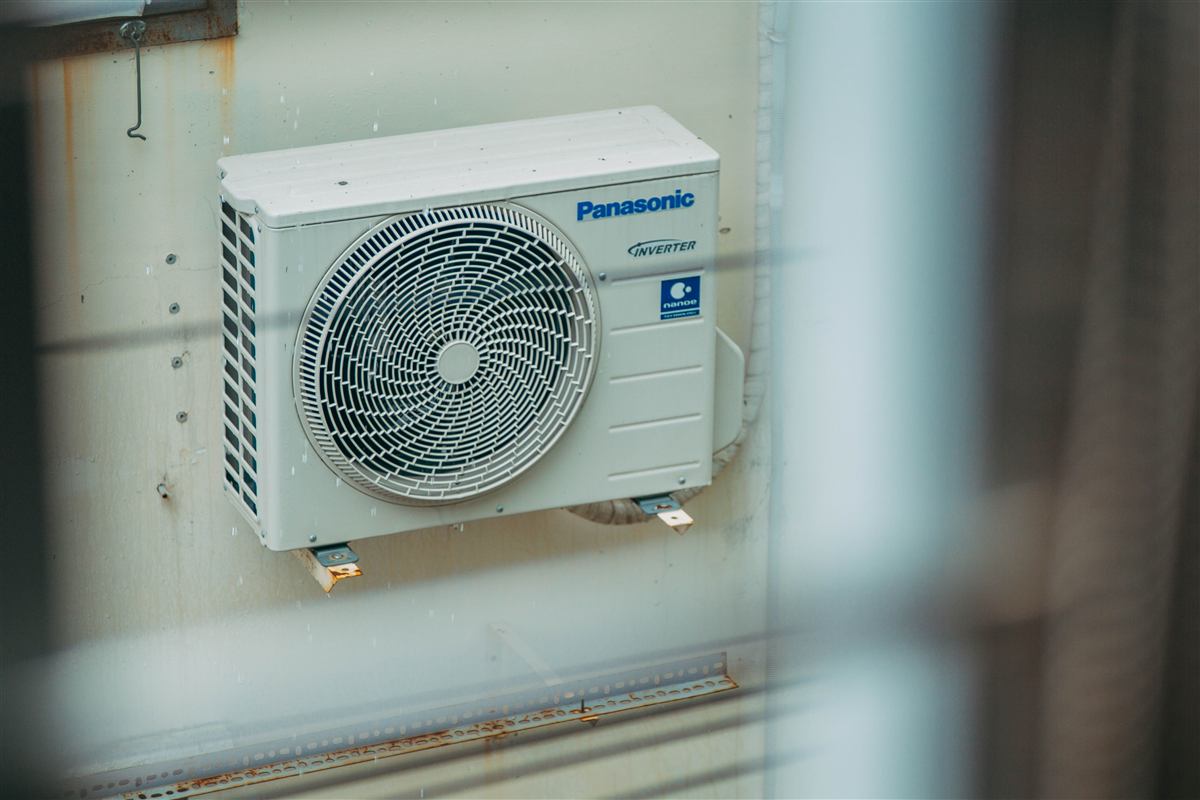
Set to cool and getting heat means the refrigerant is flowing the wrong way. Two causes account for nearly all of it, and one of them you can check yourself in two minutes.
A heat pump is one machine that runs in two directions. The component that decides which direction is the reversing valve: in cooling it sends hot refrigerant to the outdoor coil and dumps heat outside, and in heating it does the opposite.
If you have asked for cooling and the vents are blowing warm, the valve is in the heating position. Either nothing told it to switch, or it was told and could not. That distinction is the whole diagnosis, and it maps onto the two most common causes below.
This is a different problem from a system that cools weakly. Weak cooling points at airflow or refrigerant charge. Actively warm air in cooling mode points at direction.
Start here, because it costs nothing and it is the single most common cause after a thermostat has been replaced.
Heat pump thermostats have an O/B terminal that drives the reversing valve, and it is configurable because manufacturers do not agree on which direction is the default. Set it to the wrong polarity and the system does exactly the opposite of what you ask: heat when you call for cooling, cooling when you call for heat. Our heat pump thermostat guide covers the setting in detail.
Work through this in order:
Changing O/B polarity is in the installer settings of most thermostats. If you are not confident in that menu, it is a five-minute job for a technician and worth confirming rather than guessing.
If the thermostat is configured correctly and the system still runs backwards, attention moves to the valve and the solenoid that drives it.
Two failure modes produce the same symptom:
One thing you can observe: the reversing valve makes a distinct whoosh or clunk when it shifts. If you switch the thermostat between heating and cooling and hear nothing at all from the outdoor unit, that absence is informative. Our defrost cycle guide describes the same sound, because defrost works by shifting this exact valve.
Beyond listening, this is technician territory. Diagnosing a valve properly requires reading refrigerant pressures on both sides, and anything that opens the sealed system legally requires EPA Section 608 certification.
You are watching a defrost cycle. Only relevant in cold weather, but worth ruling out. During defrost the system deliberately runs in cooling mode outdoors, and indoors the supply air can feel wrong. If this happens in winter and resolves within roughly fifteen minutes, it was normal operation rather than a fault.
The anti-short-cycle delay is confusing you. After a mode change the compressor is held off for a few minutes by design. During that window the indoor blower may run while the outdoor unit does not, delivering air at whatever temperature the ducts already held. Wait ten minutes after changing modes before drawing conclusions.
Backup heat is running alongside cooling. Rare, and it points at a control or wiring fault where the heat strips are being energised when they should not be. If your indoor unit is producing genuinely hot air rather than merely unconditioned air, this is worth raising specifically, because it wastes a great deal of electricity while it happens.
Low refrigerant charge. More often this produces weak cooling than reversed operation, but a system low enough to trip its protections can behave unpredictably. A leak is a technician job and running the system low risks the compressor.
If nothing at all is happening rather than the wrong thing happening, start from the not-turning-on checklist instead. If the problem is the mirror image of this one, cold air when you asked for heat, see blowing cold air on heat mode.
Can a thermostat setting really make a heat pump run backwards? Yes, and it is one of the most common causes. The O/B terminal controls the reversing valve, its polarity is configurable, and setting it wrong inverts heating and cooling. This is why the problem so often appears immediately after a thermostat replacement.
Is it damaging to keep running the system while it does this? It is not usually damaging in the short term, but it is expensive: you are paying to heat the house while asking it to cool. If the cause turns out to be backup heat energising incorrectly, the cost climbs steeply, so it is worth switching the system off rather than leaving it running while you wait for a visit.
Why does it cool correctly sometimes and not others? Intermittent behaviour usually points at a solenoid or a valve that shifts sometimes and sticks others, or at a marginal electrical connection. Note when it fails, since a pattern tied to outdoor temperature or to a mode change is useful diagnostic detail.
Could this be a refrigerant problem? Low charge more commonly causes weak cooling than reversed operation. If cooling is simply poor rather than actively warm, charge and airflow are the more likely explanation, and a leak needs a certified technician rather than a top-up.
Causes are ordered by how often each turns out to be the answer rather than by severity, so the checks that cost nothing come first. The line between homeowner checks and technician work is stated explicitly rather than left ambiguous.
Primary references for the figures and procedures on this page. Where a number here is a range drawn from field experience rather than a published measurement, it is labelled as such in the text.
Last checked September 2026. Procedures are general to residential air-source systems; confirm against the manual for your exact model.
Equipment brand accounts for a small share of how your system performs. Installation quality accounts for most of it. Screen the installer harder than the box.

Installed prices run from $5,500 for a straightforward single-zone swap to $22,000 for a whole-home ducted system with electrical work. Here is what drives the difference.

The first zone carries the outdoor unit and most of the labor. Every zone after that is comparatively cheap — until you cross the multi-head threshold.

The short answer is yes, and modern cold-climate units are rated to keep producing useful heat down to -13°F. The longer answer is about capacity, not failure.