
How to Choose an HVAC Contractor: 12 Questions to Ask
Equipment brand accounts for a small share of how your system performs. Installation quality accounts for most of it. Screen the installer harder than the box.
Connect this button to your email provider (Mailchimp, ConvertKit or Beehiiv) to start collecting subscribers. The form endpoint goes here.
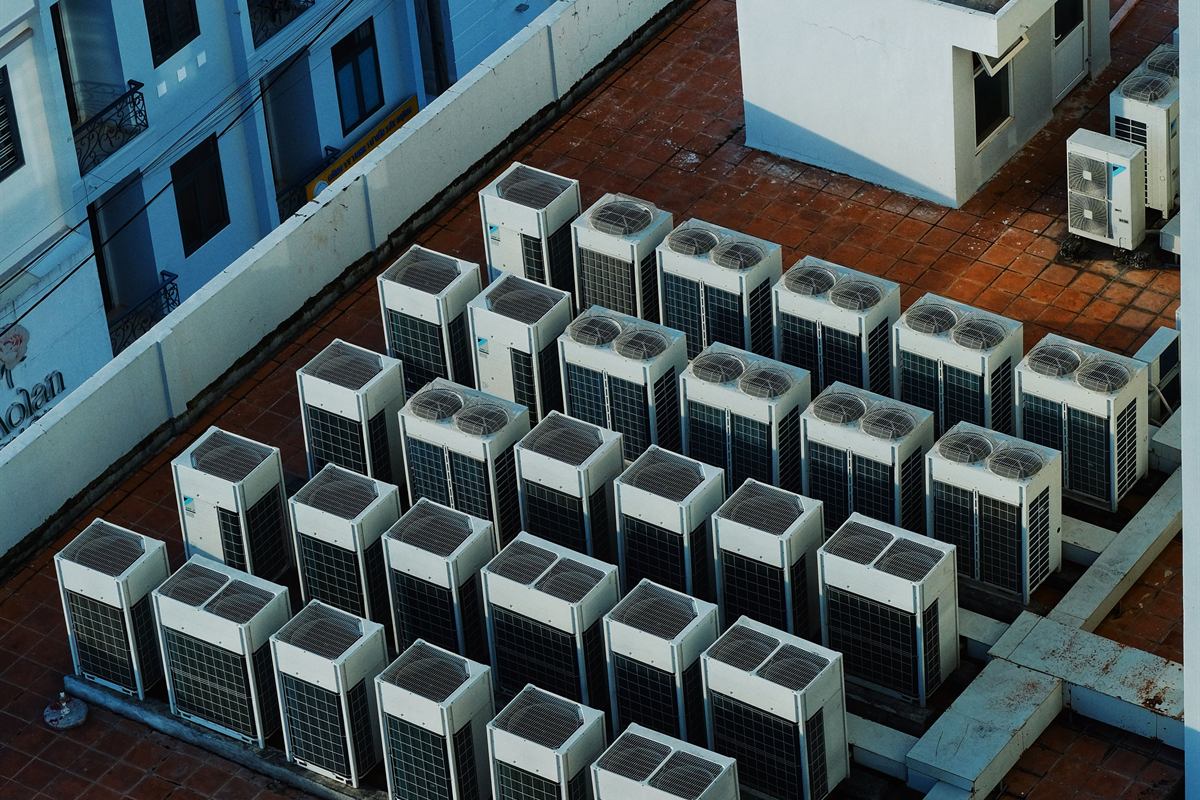
The federal credit expired. What replaced it is state-administered, income-restricted, and in several large states already spent. Knowing which is which changes what you should pay.
The federal 25C tax credit that most homeowners were counting on expired on December 31, 2025, and it did not come back for 2026. What remains is a patchwork of state-administered rebate programs funded by the Inflation Reduction Act, plus utility rebates and a handful of state tax credits. Some of that money is generous. Some of it is already gone.
This page covers how the money is structured, which states have working programs right now, and which ones have run dry, so you know what to expect before a contractor quotes you a number that assumes a rebate you cannot actually get.
There are two different things people call "the federal rebate," and confusing them is the single most common mistake we see.
The 25C tax credit is gone. It was worth up to $2,000 against a qualifying heat pump, it was claimed on your tax return, and it expired at the end of 2025. If your system was placed in service during 2025 you may still be able to claim it on that year's return using Form 5695, but a 2026 installation gets nothing from 25C.
The IRA rebate programs are alive, but they are run by your state, not by the IRS. The Inflation Reduction Act put $4.3 billion into formula grants for states through the Home Electrification and Appliance Rebates program, usually abbreviated HEAR and sometimes called HEEHRA. This is a point-of-sale rebate, not a tax credit, so it comes off the invoice rather than off your tax bill. The catch is that each state builds and runs its own version on its own timeline, and once a state's allocation is spent, it is spent.
HEAR is income-restricted, and this trips up a lot of homeowners who assume it applies to everyone. Eligibility is based on your household income relative to the Area Median Income (AMI) where you live:
| Household income | What HEAR covers | Cap on a heat pump |
|---|---|---|
| Below 80% of AMI | 100% of project cost | Up to $8,000 |
| 80% to 150% of AMI | 50% of project cost | Up to $8,000 |
| Above 150% of AMI | Not eligible | None |
The frequently quoted "$14,000" figure is the ceiling for a whole package of electrification work, not for the heat pump alone. It can include a heat pump water heater, an electrical panel upgrade, wiring, an induction range and a heat pump clothes dryer, each with its own sub-cap. If you are only replacing the heating system, the number that matters to you is the heat pump cap, not the headline.
Note also that AMI is local. A household income that is comfortably under 80% of AMI in an expensive metro can be over 150% in a rural county in the same state, so check your own county's figure rather than assuming.
This is the part almost nobody tells you clearly. HEAR money is finite and awarded first-come, first-served, and several of the largest and earliest states have already exhausted their single-family allocations. Being in a "participating" state is not the same as being able to get a rebate.
| State | Status as of September 2026 | What is on the table |
|---|---|---|
| Massachusetts | Active | Mass Save runs independently of HEAR and is among the most generous in the country |
| New York | Active | NYS Clean Heat, delivered as an instant discount through participating contractors |
| Washington | Active | HEAR launched June 2026 |
| Minnesota, Wisconsin | Active | HEAR programs running |
| California | Waitlist only | Single-family funds fully reserved; utility rebates still available |
| Colorado | HEAR closed for single-family | State tax credit and utility rebates still apply |
| Maine | HEEHRA paused, waitlist open | Efficiency Maine rebates continue separately |
| Pennsylvania, New Hampshire | Not yet launched | Awaiting federal approval or still in development |
| Ohio, Texas, Michigan, Oregon, Illinois, New Jersey | Activating late 2026 | Check before assuming availability |
Two lessons follow from that table. First, if you are in a state that has not launched yet, waiting has real option value, because a program that opens in Q4 could be worth thousands. Second, if you are in a state that has already closed, do not let a salesperson build a rebate into your quote math. Ask them to show you the reservation confirmation, not the brochure.
Massachusetts (Mass Save). The most generous mainstream program in the country, and it is utility-funded rather than HEAR-funded, so it is not subject to the federal money running out. For 2026 the whole-home rate is roughly $2,650 per ton capped at $8,500, with lower rates for partial and single-zone systems. Bonuses of around $500 each are available for documented Manual J sizing and for weatherization. Income-qualified households can reach substantially higher amounts. The 2026 rate is a step down from 2025, when it was about $3,000 per ton with a $10,000 cap, which is a good illustration of why you should confirm current numbers rather than relying on a year-old article.
New York (NYS Clean Heat). Delivered as an instant discount on the contractor's invoice rather than as a rebate you apply for afterward, which is genuinely better for cash flow. The 2026 cycle moved from per-BTUh to flat-rate incentives per project and added a weatherized tier. Amounts vary meaningfully by utility territory and are higher in designated Disadvantaged Communities. Air-source projects can reach roughly $12,000 and ground-source considerably more.
California. The state's headline programs, TECH Clean California and HEEHRA single-family, are exhausted and waitlisted as of early 2026. That does not mean nothing is available: utility rebates continue independently, with SMUD and LADWP among the more useful. Treat any quote that assumes an $8,000 state rebate with real skepticism unless you have a reservation in hand.
Colorado. HEAR single-family has closed in both regions, but Colorado stacks unusually well through other channels: a state heat pump tax credit, plus utility rebates from Xcel and Black Hills. The stacking is what makes Colorado worthwhile, not any single program.
Maine (Efficiency Maine). Long-running and well-regarded, with rebates that scale by whether the heat pump is the primary heating system or a supplement. HEEHRA applications are paused with a waitlist, but the core Efficiency Maine rebates continue.
The interesting money is usually in combining programs rather than in any single one. A typical stack looks like a state or utility rebate, plus a state tax credit if your state has one, plus a manufacturer or contractor promotion. What you generally cannot do is claim two federal-funded programs for the same equipment: HEAR and the HOMES efficiency rebate program cannot both pay for the same heat pump, though they can sometimes cover different measures in the same project.
Utility rebates usually stack on top of state programs without conflict, because the funding sources are different. Ask your contractor to list every incentive they are applying for, with the program name next to each amount. If they cannot produce that list, the rebate math in their quote is not something you should rely on.
Rebate programs change more often than almost anything else in this field. Any figure on this page, or on any other page you read, should be treated as a starting point for a conversation with the program administrator rather than as a number you can bank on.
Is there any federal heat pump tax credit left in 2026? No. The 25C credit expired December 31, 2025 and was not extended. The federal money that still exists flows through state-run rebate programs instead, and those are income-restricted in a way the tax credit was not.
My income is above 150% of AMI. Is there anything for me? Not through HEAR, which cuts off there. Utility rebates and state tax credits generally have no income restriction, and in several states those are worth more than people assume. Massachusetts and New York in particular pay meaningful amounts regardless of income.
Can a contractor apply the rebate for me? Often yes, and in New York the incentive is designed to come off the invoice through a participating contractor. That convenience has a downside: it ties you to contractors enrolled in the program, which is a smaller pool. Compare quotes from enrolled and non-enrolled contractors before deciding the rebate is worth it.
What happens if the money runs out between my quote and my install? You pay the difference, unless you hold a reservation. This is exactly why pre-approval matters, and why quotes that show a rebate as already deducted are worth questioning.
Homeowners who collect three written quotes typically save 12–18% on the same system. Tell us your ZIP and we will connect you with licensed installers in your area.
Every figure on this page is a range, not an average, and the distinction matters. A national average blends a garage mini split with a five-ton ducted replacement and describes neither. Ranges tell you where your own job is likely to land.
Found something out of date or contradicted by a quote you have in hand? Tell us — corrections are the messages we most want to receive.
Primary references for the figures and procedures on this page. Where a number here is a range drawn from field experience rather than a published measurement, it is labelled as such in the text.
Last checked September 2026. Rebate amounts and program status change frequently; always confirm against the official program page before you sign a contract.
Equipment brand accounts for a small share of how your system performs. Installation quality accounts for most of it. Screen the installer harder than the box.

Installed prices run from $5,500 for a straightforward single-zone swap to $22,000 for a whole-home ducted system with electrical work. Here is what drives the difference.

The first zone carries the outdoor unit and most of the labor. Every zone after that is comparatively cheap — until you cross the multi-head threshold.

The short answer is yes, and modern cold-climate units are rated to keep producing useful heat down to -13°F. The longer answer is about capacity, not failure.