
How to Choose an HVAC Contractor: 12 Questions to Ask
Equipment brand accounts for a small share of how your system performs. Installation quality accounts for most of it. Screen the installer harder than the box.
Connect this button to your email provider (Mailchimp, ConvertKit or Beehiiv) to start collecting subscribers. The form endpoint goes here.
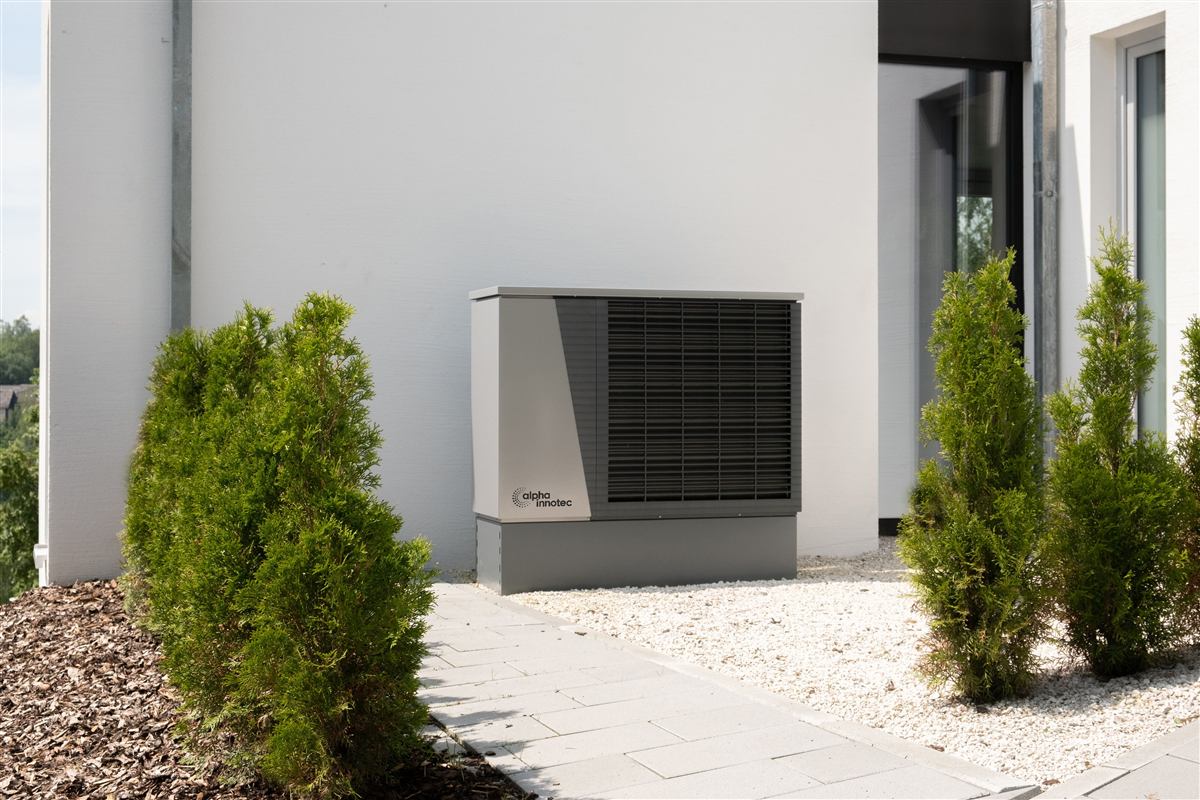
Auxiliary heat costs several times more per unit of warmth than the compressor does. Four settings decide when it engages, and most systems are handed over configured badly.
Auxiliary heat is not a fault. It is the system covering a gap the compressor cannot close on its own, and there are conditions where it running is exactly right.
Aux heat is behaving correctly when:
Suppressing aux heat in genuinely cold weather does not save money, it just makes the house cold and the system run continuously without catching up. The goal is not zero aux heat. The goal is aux heat only when the compressor genuinely cannot cope.
The signal that something is wrong is aux heat running on mild days, or running for long stretches in weather your system used to handle. If that is what you are seeing, the settings below are where to look, and aux heat that will not turn off covers the mechanical faults that produce the same symptom.
Names differ by brand, so these are described by what they do. All of them normally live in the installer or advanced menu rather than the everyday screen.
1. Auxiliary heat lockout (outdoor temperature). The most powerful of the four. It prevents backup heat engaging at all when the outdoor temperature is above a value you set. Setting it near your balance point stops strip heat running on days the compressor could have handled alone. This is the single highest-value change for most homeowners.
2. Droop, or the aux differential. This controls how far behind the setpoint the house must fall before backup engages. Set too tight, backup joins in at the first sign of a small gap. Widening it slightly gives the compressor more time to do the work at a fraction of the running cost.
3. Adaptive or smart recovery. This decides how the system approaches a scheduled temperature change. Configured for a heat pump it ramps gradually; configured for a furnace it closes the gap fast, which means strip heat. Our thermostat guide covers which models handle this well.
4. Equipment type. Worth verifying rather than assuming. A thermostat configured as a conventional furnace system rather than a heat pump with auxiliary heat will behave wrongly in ways no other setting can correct.
This is the behavioural change that saves the most, and it is counterintuitive if you are used to a furnace.
With a furnace, turning the thermostat down at night and back up in the morning saves money, because a furnace closes the gap at the same efficiency regardless of how large the gap is. A heat pump does not work that way. Faced with a large gap it brings in resistance backup, which costs several times more per unit of heat than the compressor. The saving from eight hours at a lower temperature is frequently wiped out by twenty minutes of strip heat closing the gap in the morning.
Practical guidance:
These two get confused constantly, and the confusion is expensive.
| Auxiliary heat | Emergency heat | |
|---|---|---|
| How it engages | Automatically, alongside the compressor | Manually, by you selecting it |
| Compressor | Keeps running | Shut off entirely |
| When it is right | Below the balance point, and during defrost | Only when the heat pump is broken |
| Running cost | High, but offset by the compressor still working | Highest, because all heat is now resistance heat |
If your thermostat has been left on emergency heat, that alone explains a very large bill, and switching it back to normal heat is the entire fix. It is worth checking before adjusting anything else.
If the lockout and differential are configured sensibly and backup heat still runs on mild days, the cause is mechanical rather than configurational. The usual candidates:
A useful test: note the outdoor temperature when aux heat engages, several times. If it engages consistently well above where your lockout is set, either the lockout is not being applied or the sensor feeding it is wrong. That single observation saves a technician a lot of time.
Can I just turn auxiliary heat off completely? You can, on most thermostats, and you should not. Below the balance point the compressor cannot meet the house's heat loss on its own, and disabling backup leaves you cold while the system runs continuously. Set a sensible lockout temperature instead of removing the function.
What temperature should the aux lockout be set to? Near your system's balance point, which depends on your house and your equipment rather than on a universal number. If you do not know it, a starting point below freezing is common, and the better approach is to ask your installer for the balance point from the design calculation.
Why does aux heat come on when I raise the temperature manually? Because a large sudden gap between room temperature and setpoint is exactly the condition that calls for backup. Raise the setpoint in small increments, or let a gentle schedule do it, and the compressor handles it alone.
Is it normal for aux heat to run during defrost? Yes, and it is desirable. During defrost the indoor coil goes cold, and backup heat tempers the supply air so your vents do not blow cold. Those are short bursts and are not what makes a bill large.
This page separates the cases where auxiliary heat is behaving correctly from the cases where it is misconfigured, because turning off aux heat that is genuinely needed leaves you cold rather than saving money. Settings are described by function, since the label differs between thermostat brands.
Primary references for the figures and procedures on this page. Where a number here is a range drawn from field experience rather than a published measurement, it is labelled as such in the text.
Last checked September 2026. Setting names vary by thermostat brand; confirm against the installer manual for your model.
Equipment brand accounts for a small share of how your system performs. Installation quality accounts for most of it. Screen the installer harder than the box.

Installed prices run from $5,500 for a straightforward single-zone swap to $22,000 for a whole-home ducted system with electrical work. Here is what drives the difference.

The first zone carries the outdoor unit and most of the labor. Every zone after that is comparatively cheap — until you cross the multi-head threshold.

The short answer is yes, and modern cold-climate units are rated to keep producing useful heat down to -13°F. The longer answer is about capacity, not failure.